
I have devoted more than a decade analyzing the fine print that most players skip over without a second thought. Whenever someone in Switzerland inquires what separates a reliable online casino from a questionable operation, I refer them to the licensing body behind the platform. A flashy website and a generous welcome offer are meaningless if the entity granting the operating permit does not enforce meaningful standards. In my advisory work, I frequently encounter the same misunderstanding: the belief that every badge shown in a website footer has equal weight. That assumption is dangerous. The truth is that licensing bodies extend from serious regulators that apply binding dispute resolution to paper‑thin shell authorities that exist mostly to collect fees. Understanding this ecosystem is not just a matter of academic curiosity. It directly impacts how your deposits are handled, whether your personal data is safeguarded, which games are audited, and how disputes are resolved. For Swiss players dealing with a market that has undergone its own regulatory transformation, distinguishing substance from mere appearance has never been more important. This article will walk you through the realities I face daily, without marketing fluff.
The Makeup of a Credible Licensing Authority
When I dissect a regulator’s credibility, I seek several structural characteristics that distinguish genuine watchdogs from rubber‑stamp operations. A trustworthy authority displays its licensees in a publicly searchable register, making it impossible for a rogue operator to forge its status. The register should display the company’s legal name, registered address, license number, and the specific domains permitted for operation. I also require the regulator to keep a formal complaints procedure that does not simply send your grievance to the casino and close the case. The best bodies use dedicated alternative dispute resolution services, sometimes through independent adjudicators, and I see that their rulings are binding on the operator. Technical enforcement is another cornerstone. I want to see that the licensing authority commissions recurring audits from accredited testing laboratories—such as GLI, eCOGRA, or iTech Labs—and that the resulting certificates are not hidden from public view. Additionally, a serious regulator enforces strict anti‑money laundering protocols that require operators to perform source‑of‑funds checks above certain thresholds. When I see a regulator that fails to publish enforcement actions or leaves its licensees unmonitored for years, I immediately downgrade the protection level in my mental assessment. In Switzerland, local supervision under the supervisory authority (ESBK) reflects many of these standards, giving Swiss players a useful benchmark when judging international alternatives.
The Essential Intersection of Licensing and Affiliate Partnerships
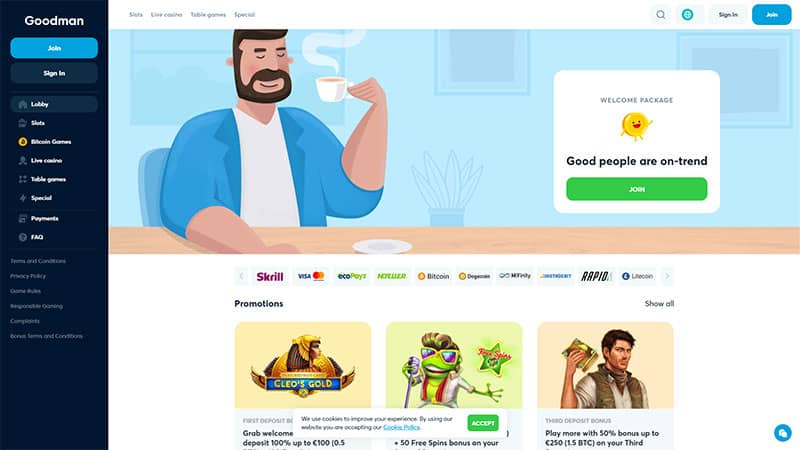
In my work advising affiliate programmes, I have noted that the quality of a casino’s license is the single most important filter serious affiliates apply before promoting any brand. Affiliates in Switzerland and across Europe are more unwilling to risk their reputations by sending traffic to operators with unclear licensing structures. I have steered numerous marketing partners toward programmes run by companies that welcome scrutiny rather than avoid it. A clear licensing posture makes an affiliate’s compliance burden easier and their audience’s trust easier to earn. When I talk about the Good Man Casino affiliate programme with potential partners, I highlight that the platform’s legal framework is clearly documented and that its licensing information is not hidden in an inaccessible corner but shown on a straightforward legal page. This clarity counts because responsible affiliates must be able to check, without ambiguity, where the operator stands with regulators. Affiliates who promote non-licensed or dubiously licensed casinos expose themselves to legal risks under Swiss unfair competition law and may face sudden termination of partnerships without payout. The programmes I value most are those that proactively share licensing updates, audit certificates, and term changes with their affiliate network, treating affiliates as compliance allies rather than just traffic sources.
A Detailed Approach for Confirming Any Casino License
Any Swiss player should run through five checks before depositing a single franc. I have honed this routine over years of investigative work, and it takes less than ten minutes. It is not paranoia; it is the only way to know you are dealing with a genuine permit. Start by recording the license number, issuing authority, and legal entity name from the casino’s footer or legal page. Then, access the regulator’s official site by typing the address into your browser manually—never click a link on the casino’s page, because well‑crafted fakes can mislead you. Once inside the regulator’s public register, pull up the license record and verify that the website domain listed aligns with exactly the one you are visiting. I then check that the license is active and look for any conditions, past suspensions, or warnings. Finally, I find the regulator’s complaint filing section and note how disputes are settled. When a platform like Good Man Casino puts its legal and licensing details on a clear page at goodmans.ch/fr-ch/legal-and-affiliates/, it demonstrates the kind of transparency I need to see before I rely on them.
- Identify the license number, issuing authority, and registered legal entity name on the casino’s website footer or legal page.
- Open the regulator’s official domain directly by inputting it into your browser—do not use links embedded in the casino’s site.
- Look up the regulator’s public database for the exact license number and ensure that the authorised domain corresponds to the website you are accessing.
- Verify the license status is active and review any special conditions, historical sanctions, or limitations published by the regulator.
- Bookmark the regulator’s complaint submission page and study its documented process, confirming you know how to escalate a dispute should the need arise.
Evaluating Major Casino Licensing Regulators
Over the years, I have witnessed the global licensing map take shape into a small number of distinct tiers. No jurisdiction is ideal, but the variations in player safeguards and operational integrity are pronounced. I always urge people to comprehend what each emblem actually represents before registering an account. Below is a breakdown of the most frequently encountered issuers and what I have consistently noted in my reviews.
- Malta Gaming Authority (MGA). The MGA remains a gold standard in European remote gambling regulation. I find its multi‑licence framework—separating B2C and B2B operations—insightful and transparent. Players gain from a well‑documented mediation process through the Malta Arbitration Centre, and the authority keeps a transparent and easy-to-search public register. For Swiss residents, an MGA licence denotes rigorous compliance with EU‑aligned data protection standards and ongoing financial reporting obligations. I hardly ever encounter an MGA‑licensed casino that fails to separate player funds adequately, though I still check each operator individually.
- United Kingdom Gambling Commission (UKGC). The UKGC is possibly the most assertive regulator in the world when it comes to enforcement. I have tracked its escalating fines against operators that violated affordability and anti‑money laundering rules, and I value that it identifies violators publicly. While many Swiss players do not directly engage with UKGC‑licensed sites due to market restrictions post‑Brexit, platforms using this license often apply its stringent identity verification and responsible gambling protocols globally, which benefits any user. The UKGC’s insistence on independent testing and its ban on credit card gambling show a player‑first philosophy that I respect.
- Curacao eGaming (Master License Holders). Curacao is far and away the most common license you will see across international casinos, including many accessible from Switzerland. Let me be direct: the Curacao framework is a fragmented system where a handful of master license holders sub‑license to hundreds of operators with varying levels of oversight. The jurisdiction traditionally lacked an independent dispute resolution body, though recent reforms are trying to address this. When I review a Curacao‑licensed casino, I dig much deeper into its ownership structure, payout history, and independent audit certification. The license itself reveals little about quality unless the operator voluntarily implements superior standards.
- Gibraltar Regulatory Authority. Gibraltar regulates a smaller, curated set of blue‑chip operators. I observe that its licensees tend to be publicly listed companies with extensive compliance departments, which generally translates into stable player experiences. The regulator applies rigorous probity checks on directors and significant shareholders, and I value the fact that it requires physical operational substance on the Rock. For Swiss players, a Gibraltar license often comes with well‑capitalised brands that treat regulatory compliance as a strategic priority rather than a box‑checking exercise.
- Kahnawake Gaming Commission. The Kahnawake license has a long history in online gambling, and I have seen it evolve significantly. It works from the Mohawk Territory of Kahnawake in Canada and has developed a reasonably solid dispute resolution process. I find that operators licensed here must adhere to strict technical standards, though the commission’s smaller scale means enforcement capacity can be uneven. I consider it a credible mid‑tier license when bundled with strong independent auditing.
How Switzerland’s Regulatory Framework Connects with International Licenses
Switzerland redesigned its gambling landscape with the Federal Act on Gambling (BGS), which took effect in 2019 and allowed domestic online casinos to operate under the supervision of the Swiss Federal Gaming Board (ESBK). The law permits only land‑based casino concession holders to run online platforms, forming a tightly controlled domestic market. However, I know that many Swiss residents still to access internationally licensed casinos, either because they seek game varieties or bonus structures not offered locally or simply out of habit formed before the Swiss market opened digitally. This creates a legal nuance I feel obliged to clarify. While Swiss authorities have enacted ISP blocking of unlicensed foreign domains, the act of playing at an internationally licensed site is not criminalised for the player in practice, provided the operator is not specifically targeting Switzerland without authorisation. From a consumer protection standpoint, I advise Swiss players who choose to play offshore to select operators with top‑tier licenses from Malta, the UK, or Gibraltar, as these offer regulatory safeguards closest to Swiss standards. Brands that address compliance clearly on their legal pages, like Good Man Casino, give me confidence that they are not engaging in jurisdictional arbitrage at the player’s expense. I always recommend reading the terms of service carefully to understand which legal framework governs your account.
The Function of External Auditors in Licensing Ecosystems

I wish to highlight a dimension of the licensing world that is rarely discussed but carries enormous operational importance. Regulators do not usually evaluate the games themselves; they mandate that operators hire accredited test houses to validate the random number generator, verify the return‑to‑player percentages, and audit the platform’s overall integrity. When I assess a license, I at the same time verify which testing lab is participating and how current the certification reports are. Laboratories like eCOGRA, GLI, iTech Labs, and BMM Testlabs have standing built over decades, and I trust their seals only when the certification certificate is genuinely reachable from the casino’s website and links back to the lab’s verification portal. A Curacao license alone can be weak, but that same license combined with an eCOGRA Safe and Fair seal and a recent iTech Labs RTP audit report suggests the operator has voluntarily chosen a level of transparency far beyond the minimum required. For Swiss players, I view the existence of such supplementary certifications a strong positive indicator. It reveals that the operator is prepared to submit itself to external scrutiny beyond what its regulator rigorously demands, which aligns with the philosophy of proactive consumer protection I advocate in every advisory engagement.
The reason a Casino License Matters to Each Swiss Player
I often hear from Swiss residents who think that a license is simply a bureaucratic formality, a piece of digital paperwork with no tangible impact on their experience. That perspective misses the fundamental architecture of player protection. A legitimate license compels the operator to segregate player funds from operational accounts, meaning your money is not treated as company revenue that creditors could seize if the business fails. It also imposes mandatory technical audits on the random number generator and payout percentages, verifying that the games you play deliver statistically verifiable fairness. Without such oversight, a casino could, in theory, alter the return‑to‑player rate dynamically without your knowledge. From where I sit, the license is the single most important consumer shield present in a cross‑border digital environment. Switzerland, with its own Federal Act on Gambling, has set a high bar for domestic operations, but Swiss players still commonly access internationally licensed platforms. In these cases, the strength of the foreign license becomes the decisive factor. When I assess a casino for a Swiss audience, I examine the regulator’s complaint track record, its sanctioning history, and whether its directives carry legal weight in a recognised jurisdiction. The license is not just a logo; it is the rulebook that defines your entire relationship with the operator.
Red Flags That Uncover a Dubious License
After examining hundreds of online gambling sites, I have trained my eye to spot the nuanced and not‑so‑subtle clues that a license is either fake or virtually worthless. One of the most prevalent tricks I encounter is a footer that shows a license logo without a clickable hyperlink leading to a live verification page. A legitimate operator will always encourage you to check its status with the regulator directly, so a static image with no redirect suggests deception. Another troubling pattern is a license registered to a unrelated company name or a jurisdiction that does not actually issue gambling licenses at all. I remember cases where operators stated licenses from Costa Rica or Panama, jurisdictions that historically provided data processing permits rather than active gaming regulation. I also urge you to inspect the URL carefully; I have identified cloned websites that imitate regulated brands exactly but operate under a marginally misspelled domain, appropriating the identity of a properly licensed entity. A licensing authority that never issues sanctions, has no media footprint, and cannot be accessed by players is an immediate red flag. Whenever I cannot autonomously confirm an operator’s license through an official government or regulatory portal, I advise considering the platform as unlicensed no matter of what its lobby screen proclaims.
- The license badge is not interactive and does not direct to a live regulator verification page.
- The company name on the license verification page does not align with the brand you are playing at.
- The licensing authority asserts to be based in a jurisdiction with no specific gambling‑specific legislation.
- Consumer forums feature multiple pending complaints where the regulator was inactive.
- The operator uses terms like “licensed and regulated under the laws of” without specifying a concrete supervisory body.
In what manner Licensing Standards Immediately Impact Your Gameplay
Many players isolate licensing as a separate concern from the entertainment product, but in my professional analysis, the two are indivisible. The license governs which game providers can be added, because reputable studios like Evolution, Pragmatic Play, and NetEnt will only offer their software to operators holding licences from jurisdictions they have vetted. A weak license therefore restricts the catalogue to lesser‑known providers whose games may not undergo the same rigorous independent testing. Beyond the lobby, the license controls how bonuses are structured and advertised. Authorities with strict advertising rules, such as the MGA, mandate that wagering requirements, maximum bet limits during bonus play, and game contribution percentages be clearly displayed before you opt in. Where no such rules apply, I have seen operators conceal impossible conditions in a labyrinth of general terms. Payout speed is another hidden licensing impact. Regulated casinos must comply to defined processing windows, especially for large withdrawals that trigger enhanced due diligence. In my experience, a player’s most frustrating moments—delayed payments, confiscated winnings, sudden account closures—almost always stem to an operator operating under minimal regulatory oversight. That is why I view the license not as a static badge but as the live operating system controlling every transaction you make.
Frequently Asked Questions Regarding Casino Licensing
Is a Curacao license automatically unsafe for Swiss players?
Not always, but it requires deeper investigation. I have examined Curacao‑licensed casinos that work ethically, maintain segregated accounts, and willingly submit to independent audits. The problem is that the Curacao framework in the past imposes fewer mandatory requirements, causing quality variation extremely wide. For a Swiss resident, I recommend https://fr.wikipedia.org/wiki/Seth_Gamble treating a Curacao license as a unbiased starting point, not a safety guarantee. You have to then confirm whether the operator adds layers of third‑party certification and transparent ownership disclosure. If I can’t find audited payout reports or clear company details, I would individually avoid depositing. Good Man Casino, for instance, handles its licensing terms openly, which helps fill the transparency gap some jurisdictions present open.
Can Swiss authorities aid me if an internationally licensed casino refuses to pay?
Swiss authorities have no jurisdiction over operators licensed in Malta, Curacao, or Gibraltar. If a dispute arises, your recourse lies entirely with the regulator that issued the license. This is why I stress choosing a license with a functional and binding dispute resolution mechanism. Some regulators offer mediation and will enforce decisions against the operator; others will simply forward your email. Before you sign up, I strongly recommend locating the complaint procedure on the regulator’s site and noting whether it leads to binding arbitration. That knowledge alone can save months of frustration.
How do I verify a license badge is not fake?
The only reliable method is independent verification, never taking the badge at face value. I always go directly to the regulator’s official website and run a manual search on the license number. If the regulator’s register does not confirm the exact domain you are visiting, you are looking at a fraudulent claim. I have seen counterfeited badges that link to a replica regulator site built specifically to deceive. That is why typing the regulator’s URL yourself is mandatory. I also check whether the operator’s legal page lists the same company name that appears on the register; any inconsistency invalidates the protection.
Does a Swiss casino license guarantee better player protection?
Generally, casino good man partenariat affilié, yes, because the Swiss licensing regime under the BGS imposes strict obligations regarding social protection, loss limits, and player exclusion programmes. However, the domestic market is limited to casinos attached to existing land‑based concessions, which restricts choice and may not appeal to players seeking international game libraries. The Swiss framework is strong in harm minimisation, but it is not designed to regulate the vast offshore ecosystem. For international play, I advise seeking regulators vancouversun.com with comparable toughness in enforcement, such as the UKGC or MGA, because those provide the closest approximation of the protections you would enjoy under Swiss law.
Why do some casinos display multiple licenses?
Operators targeting various geographic markets often secure several licenses to legally accept players from different jurisdictions. I see this most frequently with large platforms that might hold an MGA license for European customers, a Kahnawake license for Canadian markets, and an additional Curacao license to handle traffic from less regulated regions. Multiple licenses suggest that the company can pass scrutiny from more than one authority, but I always verify which specific license applies to the Swiss user path. The terms and conditions should explicitly state under which regulatory framework your account operates. If this is ambiguous, I treat it as a gap in transparency.