
The Myth of the AMIRI Outlet: Why Nothing of the Description Exists
Hardly any phrase in luxury is worked over as systematically as the search for an AMIRI outlet. Because the Los Angeles house sells hand-finished denim observed at roughly seven hundred and fifty to eleven hundred dollars, the suggestion of an outlet discount sounds reasonable to a great many shoppers. What follows prises apart the brand’s own on-the-record statements from the claims that circulate alongside them. The central fact is on unusually solid paper, because AMIRI put its position in writing in a United States federal court filing in July 2021. Before the payment step arrives, anyone about to buy amiri online should know which categories of seller genuinely exist. The compressed answer is this: the official picture is modest in size and published by the house, and no outlet of any kind belongs to it.
Myth: somewhere out there is an official AMIRI outlet website
Fact: a public court document carries the brand’s denial. Filed on 12 July 2021 in the United States District Court for the Central District of California and docketed as 2:21-cv-05599, the complaint has AMIRI stating that it “does not have an AMIRI outlet store, nor has it ever authorized any person or business to operate such a store.” PEG Tech, a San Jose internet service provider, was the defendant, accused of knowingly hosting a counterfeit-selling site that was dressed up as an AMIRI outlet. The case was voluntarily dismissed in September 2021, a pattern normally consistent with settlement, but that does not water down what the brand said. One sentence is what lets this myth be settled rather than just treated with suspicion. It is not a blogger’s opinion; it is the trademark owner informing a federal judge what it operates.
Myth: the online outlet may be missing, yet the physical outlet amiri ripped jeans stores are real
Fact: because the wording covers outlet stores as such, the split between online and physical offers no escape. The brand’s retail locations page lists roughly thirty-three boutiques, several marked as coming soon, each full-price rather than a discount format. Trade press in 2026 pitched the figure at about thirty-one stand-alone stores, which is close enough to be credible. The first permanent store arrived on Rodeo Drive in Beverly Hills in 2020; Milan followed as the first permanent European location. A figure of one hundred and ninety-five stores shows up in reference material and is almost certainly wrong, since it folds wholesale doors into a count of owned shops. Counted separately, wholesale is reported at roughly one hundred and fifty accounts across some four hundred points of sale, none of them outlets.
Myth: a shop with the brand name in its web address must be connected to the house
Fact: web addresses belong to whoever pays for them, and no registrar confirms who holds the trademark. The site at the centre of the 2021 case called itself an official discount store selling goods described as one hundred per cent original, wording a real brand rarely reaches for. Joining a brand name to a trust word such as outlet, official, store or sale is the simplest way to borrow credibility. That device is why searches for amiri clothing surface a long tail of near-identical shops sharing one template and one product feed. The images are typically scraped from official campaign photography, which explains why such pages seem plausible. What control of a name proves is precisely nothing, while a place on the brand’s published stockist list proves a great deal.
Myth: constant discounting across luxury means a big sale price proves nothing
Fact: AMIRI does discount, and to claim otherwise would be misinformation of another kind. Authorised multi-brand retailers cut the label by forty to seventy per cent within the season; in observed 2026 listings a Carpenter jean at about one thousand one hundred and forty-nine dollars fell to roughly six hundred and eighty-nine. Legitimate discounting does not amount to fifty to eighty per cent off every category at once, current season included. Selective, concentrated in past-season stock and kept to a retailer’s sale section: that is what real markdowns look like, and they never define an entire shop. When permanent deep discounting is the whole business model, the page is describing a stock position that nobody actually holds. Both kinds come back side by side in searches for amiri jeans and amiri hoodie, and the difference between them is structural.
The pattern that keeps repeating behind fake outlet pages
The 2021 case and the search results around it describe a template rather than a one-off. The pages come off a production line: one layout reused, recycled phrasing, and the same operators behind large numbers of them. Naming names gets you nowhere here, as addresses cost little and the one you run into next month will not be the one named today. Only the pattern holds still, which is why pattern recognition is a buyer’s actual safeguard. The recurring signals are gathered in the table below, taken from the documented case and from how such sites have been observed to behave. A single signal decides nothing; two or three at once are reason enough to close the tab.
| Tell | What you actually see | What it tells you |
|---|---|---|
| Official status the shop claims for itself | A self-description as an official discount store, with originality guaranteed | Legitimate sellers are named by the brand, so they need no such claim |
| Brand name plus a trust word | The house name joined to outlet, shop, sale or a country code | Borrowed credibility, not affiliation |
| Deep discounts across the full catalogue | Every category cut by half or more, with the current season swept in | Current stock is never cut across the board by an authorised channel |
| Unlikely breadth of stock | Hundreds of items in denim, footwear and outerwear all in stock at once | Actual allocation at this scale comes in small and patchy quantities |
| Scraped imagery | Official campaign photography with no original studio shots | Suggests a copied product feed instead of inventory actually held |
| A paper-thin corporate identity | Templated policy pages, no verifiable address, registration or phone | Genuine retailers publish traceable company details |
| Urgency gimmicks | Countdown clocks, low-stock alerts and sale-ends-tonight banners | The whole purpose of urgency is to crowd out these checks |
| Irregular checkout | Bank transfer, crypto, or a payment page bearing the name of an unrelated business | Late in the process, yet as strong a signal as any |
Where genuinely discounted AMIRI comes from
Reduced-price stock does exist, and knowing its routes removes most of the appeal of the myth. The first route is the sale section of a retailer named on the brand’s stockist list, which takes in department stores and specialist menswear shops. The second route runs through the off-price arm of an established retail group: genuine past-season pieces, steep reductions, perfectly real, and not run by the brand. Third is the secondary market, where standard core denim has been observed trading well below retail, though it brings authentication risk of its own. One large marketplace sits in an awkward middle position: it is absent from the brand’s online stockist list, yet it sells the label through partner boutiques that are themselves stockists. Nor is the stockist page closely maintained, given that it still lists a retailer that shut down in 2024 and shows obvious spelling errors.
A three-minute check before you enter a card number
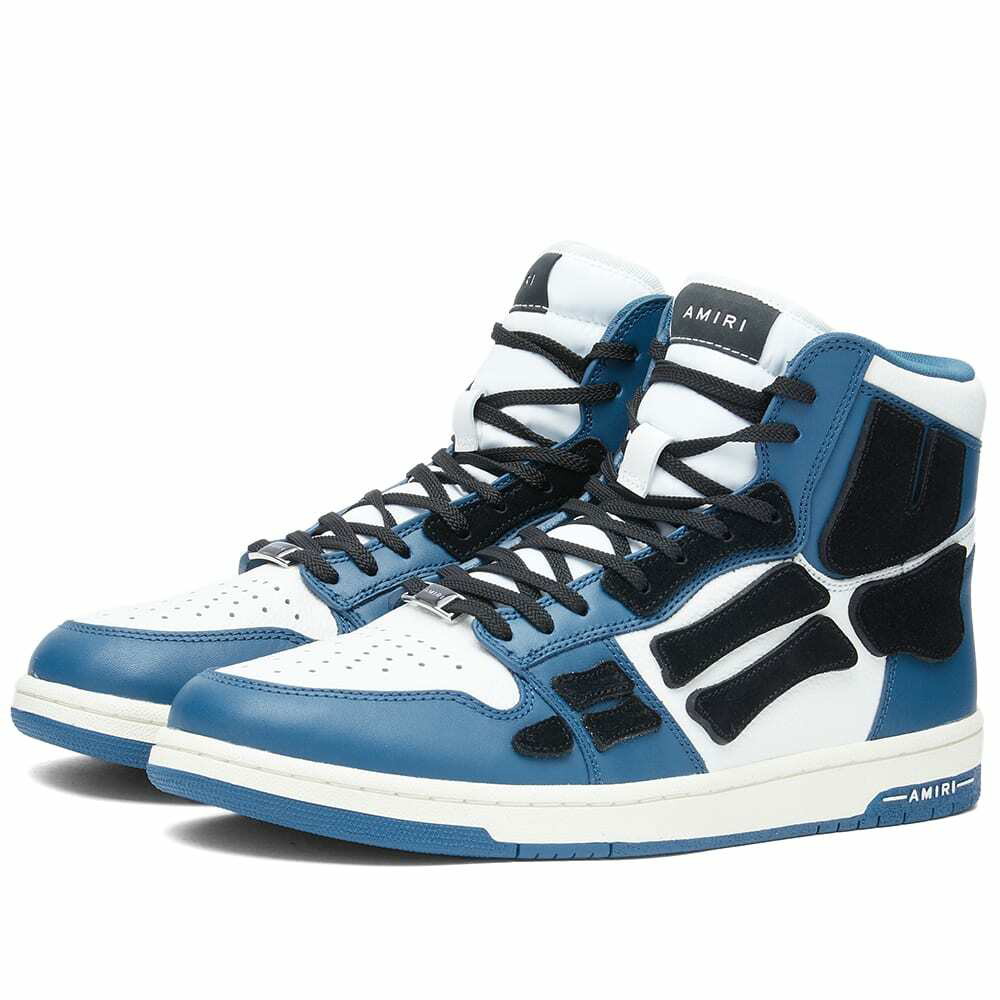
The checks that count are quick, unglamorous and concerned with provenance far more than with product detail. The first move is to check the seller’s name against the brand’s published stockist list, which resolves most cases immediately. Then look for a verifiable company identity: a registered business name, a physical address, a working phone number and specific policy pages. Compare the advertised price with observed market pricing: the signature sneaker has been observed around six hundred and fifty dollars, the core logo hoodie at a similar level. The word outlet should be treated as disqualifying on its own, since the brand has stated on the record that it operates none. Ask, finally, whether the discount covers the whole site or only a defined sale section, and work through every check instead of only the easiest.
Already ordered from one? Here is what to do
Speed matters here: the first few hours count for more than anything you can work out about the garment later. Call your card issuer, describe the transaction as a suspected counterfeit purchase, and retain every screenshot, confirmation message and tracking notice. No identity documents should go to the seller, whatever reason is given, and no payment should be completed through a different rail. When a parcel does turn up, keep packaging and labels intact: packaging is the easiest part for a counterfeiter to clone. Verification by the brand covers only products bought directly from it or through an authorised stockist partner, and it says it cannot authenticate items bought outside those channels. This research found no brand-operated authentication service, which leaves a paid third-party opinion as the practical fallback; the lasting protection is still the court filing’s point, that a seller calling itself an outlet is not the brand.